
Why I took a break (and why you should too)
We all need some time away from the never-ending news feeds and battles for democracy -- and you'll thank yourself later.

It was very much a case of be careful what you wish for.
When I started writing posts online, it began as a curious experiment.
I had lucked into being invited to do some legal commentary appearances on television, and these had increased in frequency in the spring of 2021. And I also noticed that if I went on Twitter on the day of an appearance, I got a bit of attention for my posts and picked up some new followers.
This got me thinking. What if I went on Twitter every day? The way you’re supposed to. For, say, 2-5 hours. And I could try this until the end of the year and see what happens. If something happens, awesome. If not, I stop and move on.
That was the genesis. It was Memorial Day weekend, 2021. I had about 1600 followers. I figured I’d try doing Twitter every day until Christmas and see where things stood.
Two days before Christmas, I reached 100,000 followers.
I didn’t know it when I began, but I was in exactly the right place at the right time. The reason I was getting the television appearances and had something to say online was because the Manhattan District Attorney was investigating Allen Weisselberg, then the Chief Financial Officer of the Trump Organization. Weisselberg was one of the people I had investigated as part of the Trump University case at the New York Attorney General’s office; we ultimately brought a civil prosecution against Trump University, the Trump Organization, and Donald Trump, resulting in a $25 million settlement.
On July 1, 2021, Allen Weisselberg was indicted for a fraudulent scheme to evade taxes in executive compensation, for himself and others at Trump Org. And I had my first viral tweet.
It was the first of what became a string of major cases against Trump and his businesses and associates. I not only was able to cover this emerging beat; I also had been immersed in social media and the creator space going back to 2014, as co-founder of a social video app, and a lawyer and consultant for a wide array of digital content clients, from talent to management to distribution. So it was right place, right time, right random set of experiences.
Yet the more of a response I received, the more thrilling it was, the more I wanted to build more content (Instagram, TikTok, book, podcast, this Substack, etc., etc.), and the more of a full-time job it became — all while engaged in the deeply enervating mission of fighting the fascist griftatorship all around us. Every day. For years.
We can all relate to that. We are all in these digital trenches every day. We are in a war of words and ideas and information and memes — and digital media is supplanting television as the most critical media space for American politics.
So by the time we reached the spring of 2025, when it was of course clear that there would be no break, no gentle or obvious stopping point when there would suddenly be no battle to be won, when I looked up and realized that I had grown an entirely second job (in addition to the law firm that I started and still run), when it was clear that there would be no end in sight, I decided I just needed to take a breath, to simplify things.
It was meant to be a few weeks, maybe a month. Then I made a short-lived attempt to get back into things in July of last year. But then I wanted to take August off anyway, to spend time with family. Then I figured September or October would work. But no. Life was happening, but also something snuck up on me, something I was not expecting.
I was not just enjoying the time off. I was elated.1
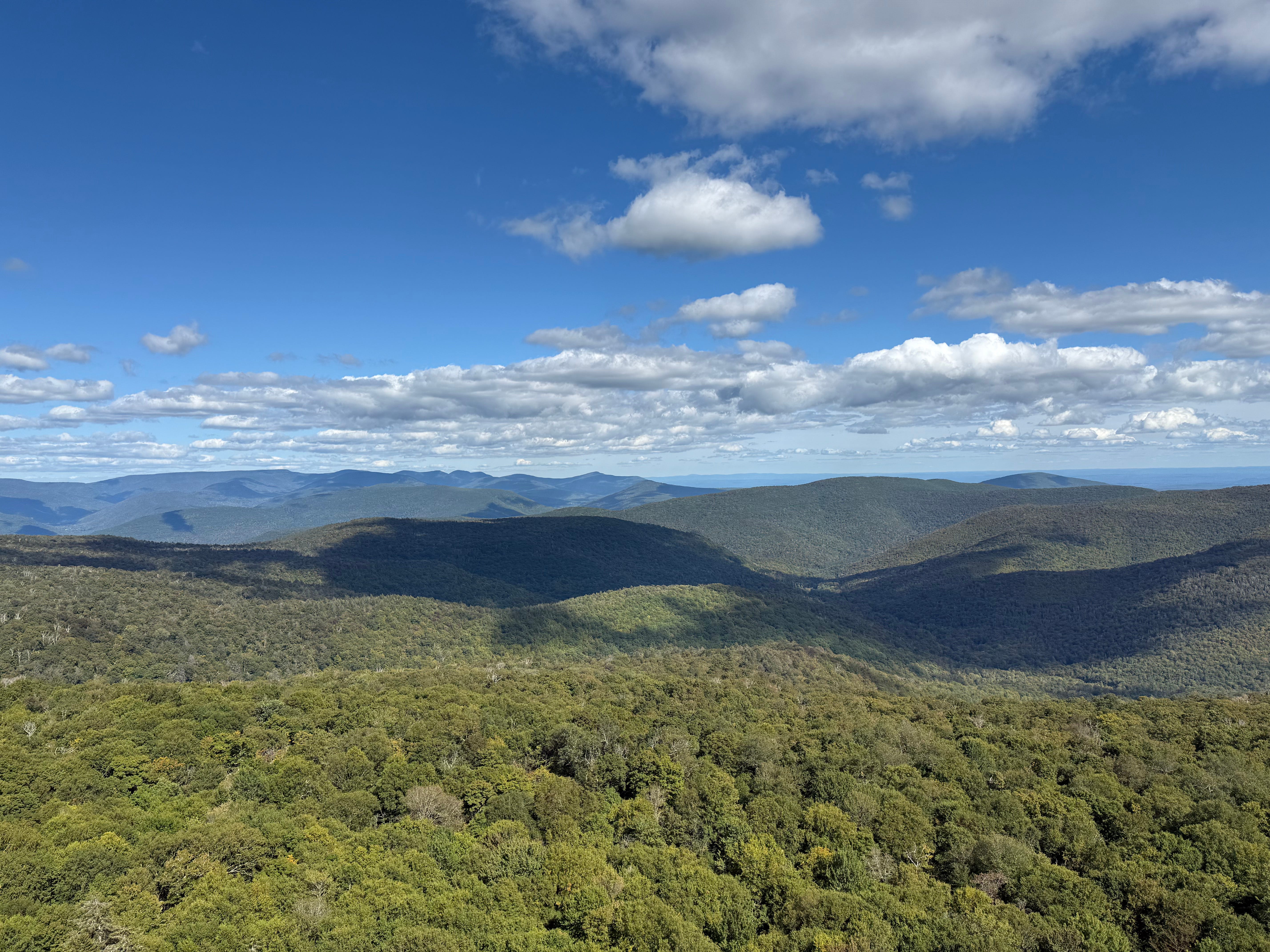
I dove into my legal practice and new efforts to expand it. I went on day-long hikes. I devoured book after book after book. I not only took a break and devoured books; I then devoured books about taking breaks. I sketched out where I was in life, what I had done, what I could do next, how I felt about the world and the fights ahead. Even when in the city, I went on increasingly long walks — 10 miles, then 13, then 16, eventually 20, 22, and even 27, a full marathon and then some. I walked through all five boroughs, over the George Washington Bridge to New Jersey and all the way down to Hoboken, across the harbor to Staten Island, north into Yonkers and Westchester, over the Tappan Zee Bridge, everywhere I could, with my phone and my laptop, doing work along the way, or just thinking.
And I did not read a bit of news. I did not open Substack. I did not open Twitter. I avoided TV. I deleted as many apps from my phone as I could. I turned off notifications. I turned off all vibrating and haptic feedback so my phone can no longer buzz me back into paying attention to it. I got a dedicated e-reader so I could separate my reading from my phone and all its other attendant distractions. I put my devices away entirely during family time. I averted my eyes if I saw a newspaper on someone else’s doorstep or a story on someone else’s phone.
I heard about the news the way most people hear about the news, from other people who read the news. The ones who say did you see what happened in the news? I left our bubble of readers and writers and fighters. I saw what it looked like and sounded like and felt like out there — and it does not look like, sound like, or feel like it does inside the bubble. And yet that world outside the bubble is where the vast majority of people, the vast majority of voters, live. We need to know what they’re seeing and hearing and thinking.
The end of the year served as a natural time to end my sabbatical, and the fifth anniversary of January 6 suddenly made sense as a hook and an anchor for the big-picture piece I had been wanting to write. This is also part of a broader shift in focus I decided to make, to take up the fight against the larger array of fraudsters, grifters, liars, and abusers, of whom Donald Trump is merely the most obvious epitome, a symptom of our deeper disease and an exacerbating factor who has in turn emboldened more predators.
Yet even now, I am aiming for a bit more balance and moderation than I had prior to my time off. I will be writing less, but, I hope, consistently. I will be prioritizing my work as a practicing lawyer — but I will be increasingly active as a lawyer in the middle of these fights, not just commentating on them.
But I also believe, even more strongly than ever, that we all should be finding times to take these kind of breaks from what will likely be a decades-long effort to defeat these forces of fascism and enemies of democracy — and, just as critically, breaks from the 24/7 fire hose of digital information that we all now just treat as a normal part of life.
This is not a new idea, of course. Especially the latter part: the idea of doing a digital detox was popularized by, among others, Baratunde Thurston in a wonderful piece for Fast Company, and the idea of “digital minimalism” is a through-line for a lot of the terrific books from Cal Newport, which I discovered and plowed through last year.
Yet there are very specific reasons why I believe all of us — the Resistance, the pro-democracy digital news and politics junkies — especially need to take these breaks, even if relatively short ones of a month or two. And why we also need to make adjustments even once those breaks are over and we are back in the trenches again.
You’re far more exhausted than you know. Whether it’s been a few years since Covid, or a non-stop death march going all the way back to 2016 or even 2015, many of us have been immersed in the never-ending insanity for far too long. You likely could use a reset, some time with less adrenaline, less upset, less stress. We all need to disconnect from the Matrix and to get outside, to do things that energize and relax us, whatever those are. For me, that was hiking, walking, tennis, reading, and a bit of meditating.2 Pick what your things are, and go do them! And keep doing them, even after you return.
It’s tough to think bigger thoughts if you’re doom-scrolling and texting and reacting all the time. Information is no longer something we go get. Information is now a feed — and that term is truly horrifying and repulsive if you think about it. We are consuming the info whether we like it or not, pushed to us, in the feeds of our media apps, in the feeds of notifications; it is constant and seemingly infinite. It interrupts any other thoughts or projects we are undertaking, slicing our time into slivers. It compels us to react, rather than to think and to act methodically. It forces us to live all of our waking hours in what psychologist and behavioral economist Daniel Kahneman called System 1 thinking — fast, intuitive, but emotional and shallow.3 This is something everyone in the digital world is experiencing, but we are even more susceptible to it because of the news-heavy nature of our info consumption — and the fact that we need to be thinking deeper thoughts and taking more well-thought-out actions if we are going to prevail. We need to put down our phones if we want to do any of that, and we need to customize our phones and our digital diets so that we are back in control of them; this is a topic I will definitely be returning to, as it ties directly into our efforts to take back control of our country and society from the tech Goliaths. In other words, we need to be inside this bubble of news feeds in order to be engaged — but we also need to do it on our own terms.
We need to understand what life is like outside the news-junkie bubble and to change our messaging accordingly. People are fond of saying that Twitter is not real life. This is both true and not true: Twitter is very much a battleground in the very real-life conflicts we are facing right now, but it is also true that most people are not on Twitter (or any of these other platforms) all or even much the time (or if they are, they’re consuming something other than news and politics). These digital spaces are very much the “town square” of the world today, but they are also not — because unlike the metaphorical town square, in today’s world most of the “town” is not in the square. Most of the public is out there somewhere else doing other things: working, working multiple jobs, picking up or dropping off or chauffeuring or taking care of their kids, meeting up with friends, watching sitcoms and sports and police procedurals and reality shows and Instagram stories about celebrities and literally anything other than news, worrying about their bank balances, running errands — living life, as banal and glorious as that is. And, again, most definitively not consuming the news or opining on it or reacting to it or arguing about it or any of those things. And yet the majority of these people vote. So go be one of them for a while, both because you’ll unwind a bit, and also because you’ll understand everyone better.
This last point is an especially insanely important one — so much so that I will come back to it in another piece soon.
In the meantime, get out of here! Seriously, I mean it. And do it soon. Because we will need all of us back on the field for the midterms this fall. But trust me, you need to take a few breaths, and you’ll be better for it. We’ll all be here when you get back.
And anxious and uncertain and exhausted, with pangs of guilt thrown in. But I was expecting those things. The elation was the surprise.
Though, at least for me, the meditating began to defeat its own purpose when embodied in an app that tries to nudge you to use it all the time. If an app is trying to gamify you into using it all the time, then you are serving the app, rather than the app serving you. Turn them off. Delete them entirely if you have to.
Instead, we want to spend a lot more of our time in what Kahneman called System 2 thinking — slower, more logical, deliberative, and with more effort. This is akin to what Newport calls “deep work” in his book of the same name. We know what these different mental states feel like, and we need both if we are to be at our best, neither too frantic nor in too much of a doldrum.
This is not a dig. I completely understand where you're coming from
But I'm sorry, I have to disagree. Strongly. The reason why we're in the mess we're in is precisely because so many people in America have tuned out from Politics, because they've chosen the blissful ignorance you so eloquently described. I fully get it. The disappointments, the corruption, the lies. It all eats at you. But that's exactly the point. To make us apathetic, cynical and nihilistic. That way only those willing to partake stay and power accrues to them to use as they desire.
No. What we need is a surge of people like us. Those willing to fight for justice and accountability. To overwhelm the rot. The problem is that there are so few of us in the fight at any given moment that we must each do the work of a small army to make up for all those who have tuned out. The answer isn't for some of us to drop out, but to inspire others to join the fight, especially at this moment.
We can do this, let's go!
You were missed! Beyond grateful for this open, accessible and completely relatable piece. I spend more time with my shrink talking about how to compartmentalize the politics around us all instead of getting to the internal purpose of therapy - ( lifelong relationships with gaslighters/bullies…hence the over reaction to our current administration ). Thank you Tristan. I take your piece as wisdom I will follow. Now doesn’t seem the time for a break, but maybe a shut window now and again just to not feel completely depleted in hope for humanity as a whole. You, Robert Hubble, HCR - getting us through. We are not alone. Have to believe in this very Star Wars moment, the Resistance will endure and eventually, rise up to topple the most crooked regime in my lifetime.